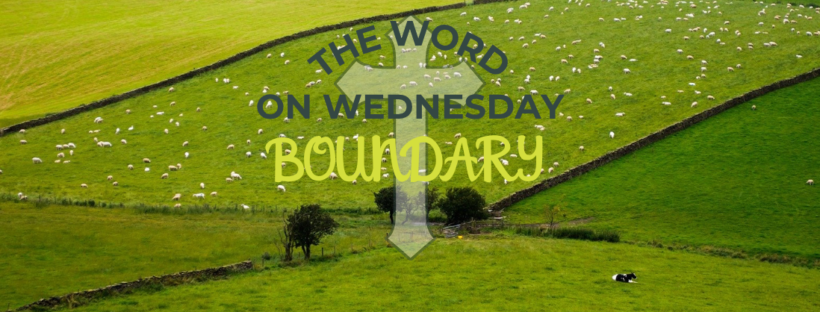
“The boundary lines have fallen for me in pleasant places; surely I have a delightful inheritance.” — Psalm 16:6 (NIV)
Pleasant Places: Finding Peace in God’s Design
In the ancient world, “boundary lines” were the physical markers—stacks of stones or cedar posts—that identified a family’s inheritance. These lines didn’t just show where a person’s land ended; they showed where their responsibility began.
To understand the heart of this scripture, consider the story of Sarah.
The Empty Well
Sarah was known in her church and community as a “servant-hearted” woman. She was the first to volunteer for the bake sale, the one who listened to her friend’s three-hour venting sessions at midnight, and the wife who constantly “walked on eggshells” to keep the peace at home. Sarah prided herself on having no boundaries. To her, a boundary felt like a “no,” and she believed that to follow Jesus, she should only ever say “yes.”
But Sarah was crumbling. Her “field” was being trampled. Because she didn’t have any fences, people walked across her heart at all hours, leaving behind the trash of their own anxieties and the heavy footprints of their demands. Her internal life wasn’t a “pleasant place”; it was a barren, dusty road where nothing could grow. She was so busy tending everyone else’s gardens that she had nothing left for her own soul—or for God.
One afternoon, Sarah sat with an older mentor, crying from sheer exhaustion. “I feel so selfish even thinking about saying ‘no’ to people,” she sobbed.
The mentor opened her Bible to Psalm 16. “Sarah,” she said gently, “Look at David’s words. He doesn’t say the boundaries are a prison. He says they are ‘pleasant.’ Imagine you are a gardener. If you don’t have a fence, the deer eat the lilies and the neighbors’ cattle trample the vines. By the time someone who is truly hungry comes to your gate, you have no fruit to give them. You aren’t being a servant; you are just being a shortcut.”
Sarah realized that by refusing to set boundaries, she wasn’t actually loving people better. She was just running out of love faster.
The next week, Sarah began to set her “pleasant places.” She told her friend she couldn’t take calls after 9:00 PM because she needed that time for rest. She told her committee she was stepping back from one project to focus on her health. At first, she felt the sting of guilt, but something curious happened. Within those new lines, Sarah started to find her “delightful inheritance” again. She had time to pray. She had the energy to truly listen when she said “yes.” Her heart started to bloom because it was finally protected.
Reflecting on Your Own Lines
Like Sarah, many of us view the word boundary as a wall of exclusion. But in God’s kingdom, a boundary is a tool for stewardship.
When we fail to establish boundaries, we are essentially trying to be God—trying to be everywhere at once, solve every problem, and carry every burden. But when we accept the boundary lines He has drawn for us—our physical limits, our need for Sabbath, and our emotional capacity—we are practicing an act of deep faith. We are saying, “Lord, I will tend the field You gave me, and I will trust You to watch over the rest.”
Today’s Reflection
Are your “boundary lines” currently falling in pleasant places or are they non-existent?
If you are feeling overwhelmed, defensive, or depleted, it may be time to ask God where He wants you to set a fence. Remember: A fence isn’t designed to keep the world out; it’s designed to keep the “pleasant place” within you safe so that you have something of value to offer the world.
A Prayer for Today
Lord, thank You for the beauty of limits. Forgive me for trying to carry the weight of the world when You only asked me to be a steward of the life You gave me. Help me to define my boundary lines with wisdom and grace. Let my heart become a pleasant place where Your Spirit can dwell in peace. Amen.

Meet Elisha
Elisha Lee is the founder of Restoring You Christian Counseling, where she combines her clinical expertise and faith to help people navigate depression, anxiety, and trauma with compassion and a spiritually grounded approach. Inspired by Psalm 147:3—”He heals the brokenhearted and binds up their wounds”—she walks alongside individuals and families on their path to healing. Elisha has authored The Mental Health Handbook: Strategies for Self-Care and Resilience, Mindfulness Biblical Affirmations of Forgiveness and Grace, and Patricia Learns Patience, which received Honorable Mention in the Children’s Book category at the Christian Market Book Awards. She also provides speaking engagements, burnout intensives, and corporate wellness programs. More resources are available at her website.
And you can find more Words on Wednesday, here.